

Table of Contents
- What Makes a Water Heater Replacement Service Stand Out
- Signs a Water Heater Needs Replacement
- Water Heater Replacement Cost: What to Expect
- How Long Does Water Heater Replacement Take
- Tank vs. Tankless: Choosing Your Water Heater Type
- Water Heater Installation Warranty and Protection
- How to Choose a Water Heater Replacement Provider
- Frequently Asked Questions
Last Updated: October 11, 2026
What Makes a Water Heater Replacement Service Stand Out
A quality water heater replacement service combines technical expertise, transparent communication, and reliable follow-up support. When you’re facing a water heater replacement, the difference between a mediocre experience and an excellent one often comes down to how the service provider handles the entire process, from the initial assessment through installation and warranty coverage.
At Classic Plumbing Solutions, we understand that water heater replacement isn’t just about swapping out old equipment. It’s about understanding your home’s hot water needs, explaining your options honestly, and delivering work that stands behind itself. A standout water heater replacement service will walk you through the decision-making process without pushing unnecessary upgrades, provide upfront pricing before any work begins, and back the installation with a comprehensive warranty.
The best providers also recognize that emergencies happen. Whether your water heater fails on a Saturday night or you’re planning a replacement during the week, the ability to respond quickly and professionally matters. This includes having technicians who are properly trained, background-checked, and equipped to handle both standard installations and complex situations.
Signs a Water Heater Needs Replacement
Your water heater typically needs replacement when age, performance decline, or damage make repair inefficient or unsafe. Most residential water heaters last between 8 and 12 years, though some last longer depending on maintenance and water quality.
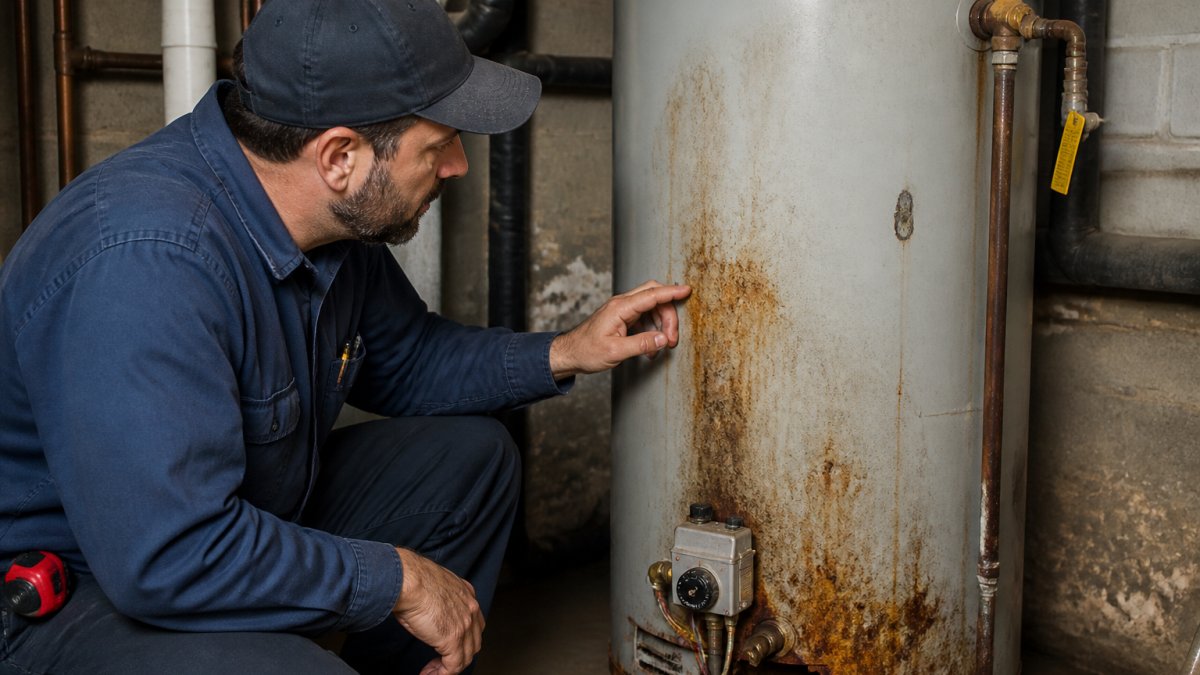
Watch for these warning signs that replacement is approaching: rust or corrosion on the tank, water pooling around the base, inconsistent hot water temperature, strange noises during heating cycles, or water that smells or tastes unusual. If your water heater is over 10 years old and developing any of these issues, replacement is usually more cost-effective than repair.
A common mistake homeowners make is waiting until the tank fails completely. By that point, you’re facing an emergency situation with limited options. Getting ahead of the problem, replacing a water heater that’s showing age but still functioning, gives you time to explore your choices and schedule installation at your convenience rather than under pressure.
If your water heater is between 8 and 10 years old and you notice reduced hot water output, start researching replacement options now. This gives you control over timing and prevents emergency calls when the tank finally fails.
Water Heater Replacement Cost: What to Expect
Water heater replacement costs break down into three main components: equipment, labor, and additional modifications. Understanding each helps you evaluate quotes and avoid surprises.
Equipment Cost
A standard 40-gallon tank water heater varies in cost for the unit itself, depending on brand, efficiency rating, and warranty tier. A 50-gallon tank also varies.
Labor and Installation
Labor typically accounts for a portion of the total replacement cost, depending on job complexity and local service rates. A straightforward replacement in an accessible location with existing connections in good condition falls at the lower end.
Additional Factors That Increase Cost
- Permit and inspection fees: Most jurisdictions require a permit for water heater replacement, with costs depending on your location. Some service providers include this in their quote; others bill it separately.
- Gas line upgrades: Switching from a tank to a tankless system, or upgrading to a higher-capacity unit, may require gas line modifications, adding to the cost.
- Electrical upgrades: Tankless electric models or upgraded tank heaters sometimes need electrical panel upgrades or new circuits, adding to the cost.
- Venting modifications: Tankless systems require specific venting configurations; if your home’s existing venting is incompatible, installation costs increase.
- Removal and disposal: Hauling away the old water heater typically adds to the cost, though many providers include this.
Total Replacement Cost Range
A typical tank water heater replacement in a standard installation has a varying total cost. A tankless replacement, accounting for equipment and likely modifications, also varies. These are ballpark figures; your actual cost depends on your specific situation.
Getting an Accurate Quote
The only way to know your actual cost is an in-home assessment. A qualified technician should inspect your existing setup, identify any modifications needed, explain what’s involved, and provide a written estimate itemizing equipment, labor, permits, and any additional work.
Reputable providers will not quote over the phone. If a service company gives you a price without seeing your installation, that quote is unreliable and likely incomplete. Demand an on-site evaluation and a detailed, written estimate before committing.
Watch for quotes that lump everything into a single line item (“Water heater replacement: $2,000”) without breaking down equipment, labor, and modifications. Itemized estimates protect you and signal a transparent provider.
How Long Does Water Heater Replacement Take
A standard water heater replacement typically takes 2 to 4 hours from start to finish, depending on your specific situation. This timeline includes disconnecting the old unit, preparing the space, installing the new water heater, making all necessary connections, testing the system, and cleaning up.
Several factors affect how long your water heater replacement takes. If your existing plumbing connections are straightforward and the installation location is accessible, you’re looking at the shorter end of that range. If modifications to gas lines, venting, or electrical connections are needed, or if the installation space is cramped or difficult to access, the process takes longer.
Tankless water heater installations often require more time than tank replacements because they involve different venting requirements and often need upgrades to gas lines or electrical capacity. Plan on 4 to 6 hours for a tankless installation, sometimes longer if your home’s infrastructure requires modifications.
Most homeowners should plan for a standard water heater replacement to take a full morning or afternoon. Tankless systems take longer. Schedule the appointment when you can be home and avoid planning other activities for that day.
Tank vs. Tankless: Choosing Your Water Heater Type
The choice between a tank and tankless water heater replacement depends on your household’s hot water usage, available space, budget, and long-term plans.
Tank water heaters store heated water in an insulated tank, providing hot water on demand up to the tank’s capacity. They’re less expensive upfront, require simpler installation, and work in most homes without modifications. The downside is that once you use the stored hot water, you wait for the tank to reheat. They also take up floor space and lose heat over time, even when not in use.
Tankless water heaters heat water on demand as it flows through the unit, eliminating storage and standby heat loss. They provide unlimited hot water, take up minimal space, and are more energy-efficient over time. The trade-off is higher upfront cost and the need for upgraded gas lines or electrical capacity in many homes. They also require professional maintenance to prevent mineral buildup.
| Feature | Tank Water Heater | Tankless Water Heater |
|---|---|---|
| Upfront Cost | Lower | Higher |
| Installation Complexity | Standard | May require upgrades |
| Hot Water Capacity | Limited to tank size | Unlimited flow |
| Space Required | 4-5 feet floor space | Wall-mounted, minimal space |
| Energy Efficiency | Moderate | High |
| Lifespan | 8-12 years | 15-20 years |
Your water heater replacement decision should align with how your household uses hot water. Families with multiple bathrooms or simultaneous hot water needs often benefit from tankless systems despite the higher cost. Smaller households or those with simpler hot water demands may find a tank system adequate.
Water Heater Installation Warranty and Protection
The warranty on your water heater replacement is your protection against defects and failures. Understanding what’s covered, and for how long, prevents disappointment if problems arise after installation.
Most water heater manufacturers provide a warranty on the equipment itself, typically covering the tank or heating elements for 6 to 10 years depending on the model. However, the installation warranty is equally important. This covers the labor and workmanship of the installation, protecting you if something goes wrong with how the system was installed rather than a manufacturing defect.
A 3-Way Warranty, covering parts, labor, and service, is a comprehensive protection in the industry. This means you’re protected if the equipment fails, if the installation work develops problems, or if you need service calls to address issues. When you work with Classic Plumbing Solutions, our unbeatable 3-Way Warranty on parts, labor, and services ensures you’re covered comprehensively.
Always ask about warranty terms before choosing a water heater replacement provider. A provider willing to stand behind their work with a strong warranty demonstrates confidence in both their equipment selection and installation quality.
How to Choose a Water Heater Replacement Provider
Selecting the right water heater replacement provider requires a systematic evaluation across credentials, transparency, warranty terms, and responsiveness.
Verify Licensing, Insurance, and Background Checks
Confirm that the provider holds a valid plumbing license.
Insurance is non-negotiable. The provider should carry general liability insurance (protecting your home if damage occurs) and workers’ compensation insurance (protecting their technicians).
Background checks on technicians are a sign of professionalism. Ask whether the company screens technicians for criminal history and driving records.
Evaluate Reputation and Track Record
Check ratings with the Better Business Bureau (BBB), Google, Yelp, and Angie’s List.
Look for how long the company has been in business. Longevity signals stability.
Assess Transparency and Communication
During your initial contact, note how quickly they respond. Do they answer questions directly, or do they rush you toward scheduling?
Request a written estimate before any work begins. The estimate should itemize:
- Equipment model, brand, and warranty terms
- Labor cost
- Permit and inspection fees
- Any modifications (gas line, electrical, venting)
- Removal and disposal of old unit
- Total cost
If the estimate is vague or incomplete, ask for clarification. A provider who can’t or won’t break down costs clearly is a red flag.
Compare Warranty Coverage
Warranty terms vary significantly and directly affect your protection. Ask about three components:
- Equipment warranty: Manufacturer coverage on the tank or heating elements, typically 6-10 years. Some premium models offer longer coverage.
- Installation/labor warranty: Coverage on the workmanship, typically 1-5 years. This protects you if the installation develops problems.
- Service warranty: Some providers offer extended service plans covering maintenance, repairs, and emergency calls for a set period (often 3-5 years).
Compare these across providers. A company offering a 3-way warranty (parts, labor, and service) demonstrates confidence in their work.
Verify Licensing for Specific Work
If your replacement requires gas line modifications, confirm the technician is licensed for gas work.
Ask About Financing and Discounts
If upfront cost is a concern, ask whether the provider offers financing, payment plans, or partnerships with lending companies.
Check Availability for Emergencies
If your water heater fails unexpectedly, can the provider accommodate same-day or emergency service? Ask about their weekend and holiday availability.
Red Flags to Avoid
- Quotes provided over the phone without an on-site assessment
- Pressure to decide immediately or claims of “limited-time pricing”
- Unwillingness to provide references or warranty details in writing
- Technicians who lack identification or won’t explain their work
- Estimates that don’t itemize costs or include vague line items
- No verifiable licensing or insurance
Create a simple spreadsheet comparing 2-3 providers across licensing, warranty terms, estimated cost, and availability. This side-by-side view makes the best choice obvious and protects you from emotional or pressure-based decisions.
Frequently Asked Questions
How do I know whether my water heater needs to be replaced?
Your water heater likely needs replacement if it’s over 10-12 years old, produces rusty or discolored water, makes unusual noises, leaks from the tank, or delivers insufficient hot water despite proper settings. A professional diagnostic appointment can confirm whether repair or replacement is the right choice. Don’t wait until failure leaves you without hot water, early replacement prevents emergency situations.
How long does water heater replacement take?
Most water heater replacement jobs take 2-4 hours from start to finish, depending on your current setup, local code requirements, and whether permit inspections are needed. Tank water heaters typically install faster than tankless systems. A licensed installer will provide a timeline estimate during your service appointment so you know exactly what to expect.
Is it better to repair or replace a water heater?
Repair makes sense for units under 8 years old with isolated problems. Replace if your heater is over 10 years old, repairs exceed 50% of replacement cost, or it fails repeatedly. An honest diagnostic from a licensed professional will tell you which option saves money and prevents future emergencies. Ask your service provider for a clear repair-versus-replace recommendation before authorizing work.
What should I look for when choosing a water heater replacement service?
Choose a licensed, insured provider with proven local experience, transparent upfront pricing, and customer authorization before work begins. Verify BBB accreditation, read customer reviews, and confirm they offer warranty protection on parts, labor, and installation. Ask about emergency availability, financing options, and whether they’re familiar with your local plumbing codes and permit requirements.
