

Table of Contents
- Signs Your Water Heater Needs Replacement
- Water Heater Life Expectancy and Age Factors
- Water Heater Repair vs. Replace: Cost-Benefit Analysis
- Average Cost to Replace Water Heater and Budget Planning
- DIY Troubleshooting Checklist
- Step 1: Verify Power and Fuel Supply (Electric and Gas Models)
- Step 2: Check the Thermostat Setting
- Step 3: Test Water Temperature and Pressure
- Step 4: Listen for Unusual Sounds and Check for Sediment
- Step 5: Flush the Tank (If Sediment Is Suspected)
- Step 6: Inspect for Visible Damage and Check Age
- When to Stop Troubleshooting and Call a Professional
- Tankless vs. Tank-Style Replacement Options
- Energy Efficiency Upgrades and Long-Term Savings
- When to Call a Professional Plumber
- Frequently Asked Questions
Last Updated: September 26, 2026
Signs Your Water Heater Needs Replacement
Catching water heater problems early can save thousands in water damage or emergency costs. Here are the most common warning signs that your water heater needs replacement rather than a simple repair.
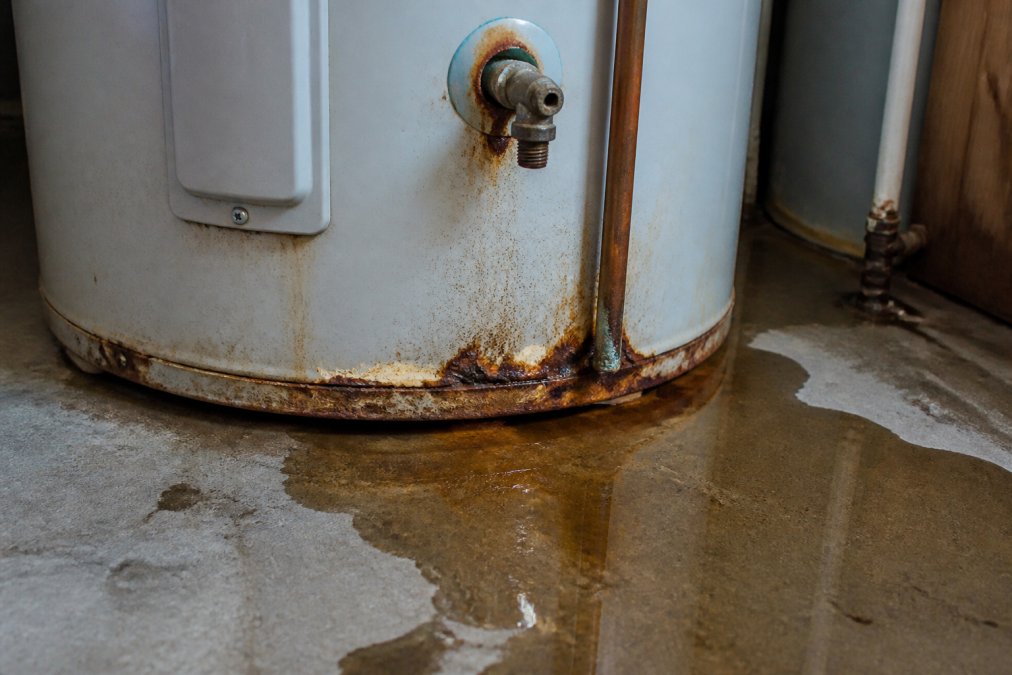
Leaking Tank or Puddles Around the Unit
A puddle under your water heater demands immediate action. Small leaks from loose inlet or outlet valves can sometimes be tightened, but water pooling directly under the tank indicates corrosion and requires replacement.
Check these spots first:
- The base of the tank
- Connection points where pipes enter the tank
- Around the pressure relief valve
- Seams along the tank sides
Strange Noises: Popping, Rumbling, or Knocking
Loud popping or rumbling indicates sediment buildup inside the tank, which reduces efficiency and damages the interior. Flushing may help if caught early, but months of noise suggests weakened tank walls and makes replacement the smarter choice.
Rust-Colored or Discolored Water
Rusty or brown water indicates the tank’s protective lining has worn away. To confirm the source, fill a clear glass with hot water and let it sit, if rust settles to the bottom, the problem is your water heater, not old pipes. Rust-colored water isn’t safe for bathing or washing.
Inconsistent Water Temperature or Lukewarm Water
Lukewarm water or rapid depletion occurs when sediment coats the heating element. If your water heater is over 10 years old with this problem, replacement usually makes more sense than repair.
Water Heater Life Expectancy and Age Factors
Tank-style water heaters last 8 to 12 years; tankless models last 15 to 20 years. Hard water significantly shortens lifespan by accelerating mineral buildup and corrosion.
Water Heater Repair vs. Replace: Cost-Benefit Analysis
This is where homeowners get stuck. Should you repair the leak, replace the heating element, or buy a new unit? The answer depends on three factors: age, repair cost, and how many problems you’ve had.
The 50% Rule: Your Primary Decision Framework
The most reliable way to decide is the 50% rule. Multiply the age of your water heater (in years) by the cost of the repair. If that number exceeds 50% of the cost to replace the unit, replacement is the smarter financial choice.
- Age × Repair Cost = 8 × $400 = $3,200
- 50% of replacement = $1,200 × 0.50 = $600
- Since $3,200 is much higher than $600, replacement wins.
When Repair Makes Sense
Repair makes sense if your heater is under 7 years old and this is the first major problem. Common repairs include replacing the anode rod, fixing a leaking pressure relief valve, replacing a failed heating element, or tightening connections, typically $150-$600. However, if you’ve had multiple repairs in two years, replacement stops the cycle.
When Replacement Is the Better Choice
Replace the unit if: age exceeds 10 years, the tank is leaking, you’ve had multiple repairs in 2 years, rust-colored water appears, or the 50% rule calculation favors replacement.
Factoring in Energy Efficiency
Modern Energy Star-certified units operate at 80%+ efficiency versus 60% for pre-2010 models. Over 10 years, energy savings can offset 20-40% of replacement cost. Ask your plumber for a detailed quote breaking down unit cost, labor, and estimated annual operating costs.
Average Cost to Replace Water Heater and Budget Planning
Replacement cost depends on unit type, size, and installation complexity. Tank-style units cost less than tankless; gas units typically cost less than electric. Ask your plumber for a detailed quote covering unit cost, labor, removal, and any necessary modifications. Classic Plumbing Solutions offers project financing and special discounts for senior citizens and military families.
DIY Troubleshooting Checklist
Before calling a plumber or assuming replacement is necessary, run through these checks. You might identify a simple fix that saves a service call, or confirm that professional help is truly needed.
Step 1: Verify Power and Fuel Supply (Electric and Gas Models)
For electric water heaters: Check the circuit breaker panel for a “Water Heater” breaker. If it’s OFF or tripped, flip it fully OFF, wait 10 seconds, then back ON. If it trips again immediately, call a licensed electrician. If it stays on, wait 30 minutes to see if hot water returns, a tripped breaker is a common cause of no hot water.
Step 2: Check the Thermostat Setting
Locate the thermostat on the tank side. If it’s set below 120°F, raise it and wait 30 minutes, then test hot water from the farthest tap. If this fixes the problem, you’re done. If temperature won’t hold or keeps resetting, the thermostat may be failing ($200-$400 repair).
Step 3: Test Water Temperature and Pressure
Set the thermostat to 120°F, wait 30 minutes, then run hot water from the farthest tap. If it takes more than 2-3 minutes, sediment or a weak heating element may be the issue. Use a thermometer to check if actual temperature matches the setting. Weak flow may indicate sediment buildup or mineral deposits in the aerator, unscrew and clean the aerator first.
Step 4: Listen for Unusual Sounds and Check for Sediment
Listen for popping, rumbling, or knocking when the tank heats, these indicate sediment accumulation. New, loud noise suggests accelerating corrosion; months of noise may respond to flushing. Check the drain valve at the tank base: clear water is normal, but brown or rust-colored water indicates corrosion or heavy sediment.
Step 5: Flush the Tank (If Sediment Is Suspected)
If you detected sediment or discolored water in Step 4, flushing the tank may restore performance and extend the heater’s life.
- Turn off the power (electric) or gas (gas models) at the unit.
- Turn off the cold water inlet valve at the top of the tank.
- Attach a garden hose to the drain valve at the base of the tank. Run the hose to a floor drain or outside.
- Open the drain valve slowly. Hot water will flow out, be careful of burns.
- Let the tank drain completely (this takes 20-30 minutes).
- Once empty, close the drain valve, turn the cold water inlet valve back on, and let the tank refill.
- Turn power or gas back on and wait for the tank to reheat.
- Run hot water from a nearby tap for 2-3 minutes to flush any remaining sediment from the pipes.
Step 6: Inspect for Visible Damage and Check Age
- Look at the manufacture date on the label. It’s usually on a sticker near the top of the tank. The first two digits of the serial number often indicate the year built.
- Scan the entire tank for visible corrosion, rust, or white mineral buildup. Check the base, sides, and top. Look at the inlet and outlet connections.
- Feel around the base of the tank with your hand. Is it warm or hot? A very hot base can indicate internal corrosion or a failing heating element.
- If the unit is over 12 years old and showing any of the warning signs above, replacement is likely necessary regardless of what these checks reveal.
When to Stop Troubleshooting and Call a Professional
If any of these apply, stop and call a licensed plumber:
- Water is actively leaking from the tank itself (not from loose connections)
- You smell gas and cannot locate the source
- Water won’t heat at all after checking power, gas, and thermostat
- The tank is visibly corroded or has rust stains running down the sides
- You’re uncomfortable performing any of these checks
- The unit is over 10 years old and showing multiple warning signs
A professional inspection costs $100-$200 but provides a definitive diagnosis and prevents costly mistakes.
Tankless vs. Tank-Style Replacement Options
If replacement is necessary, you have two main choices: stick with a traditional tank or upgrade to tankless.
Energy Efficiency Upgrades and Long-Term Savings
A new water heater uses less energy than an old one. Modern units are built to reduce heat loss and operate more efficiently.
When to Call a Professional Plumber
Some water heater problems require professional expertise. Attempting repairs yourself can be dangerous or make the problem worse.
Call a plumber immediately if:
- Water is leaking from the tank itself
- You smell gas (for gas heaters)
- Water won’t heat at all
- You see corrosion or rust on the tank
- You’re unsure about the age or condition of the unit
Frequently Asked Questions
What are the first signs of a water heater going bad?
The earliest warning signs include reduced hot water supply, fluctuating water temperature, and visible rust or discoloration in your water. You may also notice popping or rumbling sounds from the tank, which indicate sediment buildup inside. A leaking tank or puddles around the unit are critical signs requiring immediate attention. If your water heater is over 10 years old and showing any of these symptoms, replacement is typically necessary within months.
What is the typical life expectancy of a water heater?
Most tank-style water heaters last 8 to 12 years, though some may reach 15 years with proper maintenance. The lifespan depends on water quality, usage patterns, and whether the anode rod has been regularly replaced. Hard water and high mineral content accelerate corrosion and shorten the unit’s life. Tankless models typically last 15 to 20 years. If your water heater is approaching 10 years old and showing warning signs, begin planning for replacement to avoid emergency failures.
Should I repair my water heater or replace it?
If your water heater is under 7 years old and the repair cost is less than half the replacement cost, repair is usually worthwhile. However, if the unit is over 10 years old, has a leaking tank, or requires multiple repairs, replacement offers better long-term value and improved energy efficiency. Consider the total cost of ownership: a new high-efficiency model may reduce utility bills enough to justify the upfront investment, especially if your current unit requires frequent repairs.
What factors affect the average cost to replace a water heater?
Replacement costs depend on the tank size, fuel type (gas versus electric), installation complexity, and local labor rates. High-efficiency models and tankless systems cost more upfront but deliver lower operating costs over time. Additional factors include whether your existing plumbing requires upgrades, removal of the old unit, and any necessary venting or gas line modifications. Contact a professional plumber for an accurate quote based on your specific situation and home setup.
