

Table of Contents
- Safety First: When to Stop and Call a Pro
- Common Water Heater Noises and What They Mean
- Water Heater Popping Noise: Causes and Fixes
- Water Heater Rumbling Noise: Sediment and Solutions
- Water Heater Hissing Noise: Pressure and Valve Issues
- How to Flush a Water Heater to Reduce Noise
- Model-Specific Troubleshooting: Tank, Tankless, and Heat Pump
- Conclusion: Quiet Your Water Heater for Good
- Frequently Asked Questions
Last Updated: October 18, 2026
Safety First: When to Stop and Call a Pro
Water heater noise is rarely an emergency, but a few sounds are. Before you troubleshoot anything, know how to shut the unit down and which parts you should never touch while it’s hot or pressurized. Most injuries around water heaters come from scalding water, gas exposure, or electrical shock, not from the noise itself.
Know your shutoffs before you start
- Electric water heaters: The breaker is usually a double-pole 30-amp breaker in the main panel, labeled for the water heater. Flip it fully to OFF. Do not rely on a wall switch or the unit’s own thermostat as a disconnect.
- Gas water heaters: Find the gas control valve on the front of the tank. Turn the knob to OFF (not just to PILOT). If you smell gas, do not touch the valve or any switch, leave the building and call your gas utility’s emergency line from outside.
- Cold inlet valve: The valve on the cold pipe entering the top of the tank. Turn it clockwise to close. This stops new water from entering and is your first move if you see a leak.
- Pressure relief valve: The brass valve with the discharge pipe near the top or side of the tank. Never open it on a hot tank to “test” it. If it’s stuck or scaled shut, opening it can release scalding water or fail to reseat, causing a continuous leak.
When to stop and call a pro
- Gas smell. Leave the area immediately. Do not flip switches, use a phone inside, or light anything. Call your gas utility’s emergency number from outside, then a licensed plumber. Gas odors are the one noise-adjacent symptom that is always an emergency.
- Water on the floor or a leaking tank. A steel tank that leaks from the shell usually cannot be repaired, it will need replacement. Shut off the cold inlet valve and the power or gas, then call a plumber. A leak from a fitting or the drain valve may be repairable.
- Loud banging, cracking, or a sound like a hammer inside the tank. This can indicate a failing tank, a loose heating element, or a pressure problem. Shut the unit down and get it inspected before restarting.
- Screeching or hissing that won’t stop. Hissing can mean steam is escaping from a stuck relief valve or a pinhole leak is spraying onto a hot surface. Shut off the inlet and power or gas, and call a pro.
- Any burning smell or scorched wiring at the junction box. Shut off the breaker and do not re-energize until an electrician or plumber inspects it.
Never open the pressure relief valve on a hot tank to “test” it yourself. If it’s stuck or scaled shut, you can get scalded. Let a pro handle it. Also never remove the anode rod or a heating element from a tank that is full and hot, the tank is pressurized and the water can be scalding.
What to have ready when you call
Note the model and serial number from the rating plate, the fuel type, the approximate age of the unit, and whether the noise happens during heating, during standby, or only when a hot tap is running. That information lets a plumber tell you in minutes whether the noise is a known issue for that unit and whether a repair or replacement is the better call.
The U.S. Consumer Product Safety Commission has guidance on water heater safety, and it’s worth a read before you touch anything.
Common Water Heater Noises and What They Mean
Water heater noise is your system’s way of telling you something needs attention. Most sounds trace back to three things: sediment, loose parts, or pressure. Here’s a quick map before we dig into each one.
| Noise | Most Likely Cause | Urgency |
|---|---|---|
| Popping or crackling | Sediment buildup on the heating element or burner | Moderate |
| Rumbling or boiling | Thick mineral deposits at the tank bottom | Moderate |
| Hissing or sizzling | Pressure relief valve or a small leak | High |
| Humming or buzzing | Loose components or electrical issue | Low to moderate |
| Screeching or whistling | Restricted water flow or a failing valve | Moderate |
| Clicking | Normal ignition (gas) or a failing thermostat | Low to high |
If a sound is new, sudden, or getting louder, treat it as a warning. Noise changes are the earliest signal you’ll get.
Water Heater Popping Noise: Causes and Fixes
A water heater popping noise almost always comes from sediment. Minerals settle on the bottom of the tank or the heating element. When water gets trapped under that crust and boils, it pops and crackles.
The fix depends on how bad it is:
- Flush the tank. This clears loose sediment and is the first step for most popping.
- Check the heating element. On electric units, scale on the element can trap water and cause popping.
- Test your water hardness. Hard water speeds up mineral deposits. A softener slows the cycle.
- Call a pro if flushing doesn’t help. Heavy scale may need a professional descale or element replacement.
If you hear popping only when the burner kicks on, the sediment is likely on the tank bottom. Popping during the whole heating cycle points to the element on an electric unit.
Water Heater Rumbling Noise: Sediment and Solutions
A water heater rumbling noise means the sediment layer is thick. It acts like insulation, so the burner works harder and the water boils underneath. That low, rolling rumble is trapped steam bubbles pushing through mineral scale.
Rumbling is a maintenance problem, not usually a safety one. But left alone, it raises your energy bills and shortens the tank’s life.
Your options:
- Annual flushing in hard-water areas keeps scale from building up.
- A water softener reduces new mineral deposits.
- Professional descaling clears heavy buildup a garden hose can’t move.
In practice, homeowners who flush once a year report far fewer noise complaints than those who wait until something sounds wrong.
Water Heater Hissing Noise: Pressure and Valve Issues
A water heater hissing noise is the one to take seriously. Hissing or sizzling usually points to the pressure relief valve or a small leak. Steam escaping is a pressure problem, and pressure problems don’t fix themselves.
Common causes:
- Pressure relief valve stuck open or leaking. It may need replacing.
- Water pressure too high. Check with a gauge; high pressure strains the whole system.
- A pinhole leak dripping onto a hot surface, which sizzles.
- Sediment on the valve seat stopping it from sealing.
Hissing plus water near the base means shut off the inlet valve and call a plumber. Don’t wait for it to get worse.
The U.S. Department of Energy’s water heating guidance explains how pressure and temperature settings affect safety and efficiency.
How to Flush a Water Heater to Reduce Noise
Flushing is the single best fix for most noise complaints, and you can do it yourself. Here’s how to flush a water heater step by step.
What you’ll need: a garden hose, a bucket, and gloves.
- Turn off the power or gas. For electric, flip the breaker. For gas, set the thermostat to pilot.
- Shut off the cold inlet valve at the top of the tank.
- Connect the hose to the drain valve at the bottom and run it to a floor drain or outside.
- Open a hot faucet somewhere in the house to let air in.
- Open the drain valve and let the water run until it’s clear.
- Close the drain valve, reopen the cold inlet, and let the tank refill.
- Restore power or gas once the tank is full.
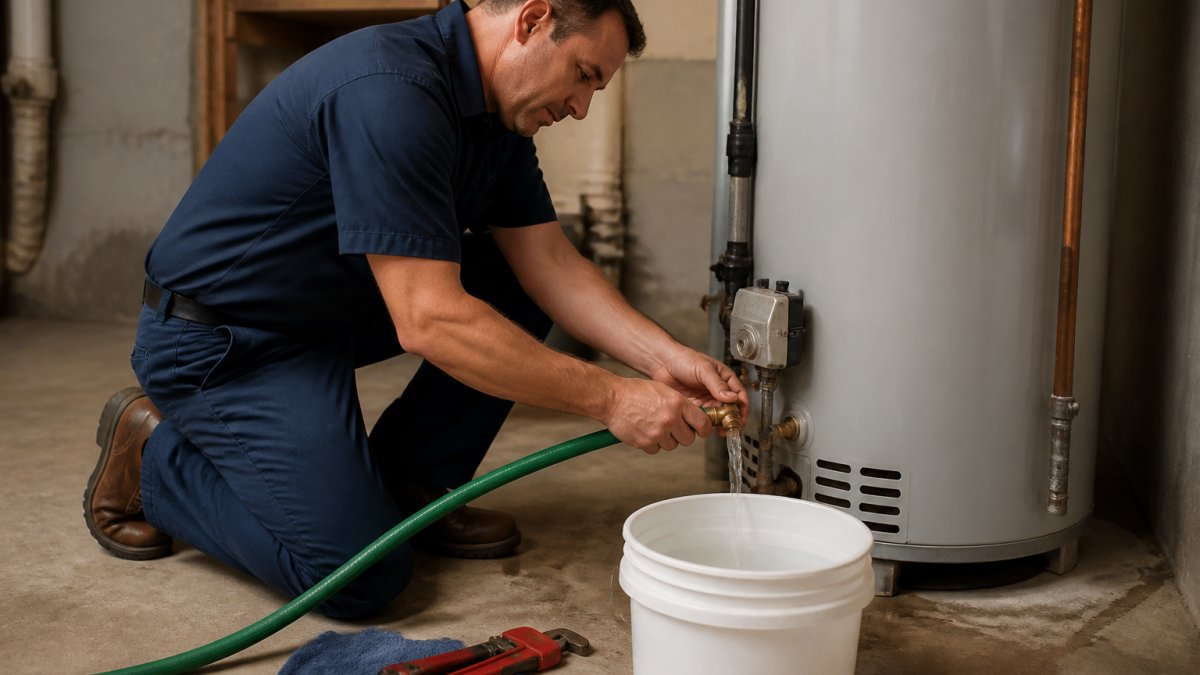
Do this once a year in hard-water areas. It’s the cheapest way to quiet a noisy tank.
Model-Specific Troubleshooting: Tank, Tankless, and Heat Pump
Different heaters make different noises, and the fix changes with the model. Use the flow below to narrow the cause before you pick up a tool. If you are not comfortable shutting off gas or working near 240-volt wiring, stop at the diagnostic step and call a licensed plumber.
Quick diagnostic flow: sound to cause to action
- Is the sound coming from the tank body, the pipes, or the burner area? Tank-body sounds (popping, rumbling) point to sediment. Pipe sounds (banging, hammering) point to water hammer or thermal expansion. Burner-area sounds (whooshing, roaring) point to combustion or draft issues on gas units.
- Does it happen only during heating, or all the time? During heating points to the heating element, burner, or sediment. All the time points to pressure, flow, or a loose component.
- Is there water, steam, or a gas smell? If yes, stop and follow the safety section above. If no, continue.
- Is the unit tank, tankless, or heat pump? Use the model-specific notes below.
Tank water heaters
Tank units are the most common source of popping and rumbling because sediment settles at the bottom. Flushing is your main tool, and it is a DIY task for most homeowners with a garden hose and a bucket. Heavy scale that flushing does not clear may need a professional descale or heating-element replacement, an electric element swap is a moderate DIY job, but it requires shutting off the breaker and draining the tank first.
Tankless water heaters
Tankless units don’t hold a tank of water, so sediment at the bottom isn’t the issue. Instead, scale builds inside the heat exchanger. A hissing, kettling, or reduced-flow complaint often means the unit needs descaling. Many units have dedicated flush ports and a manufacturer-specified descaling procedure using a pump and a mild descaling solution. Follow the manual, some manufacturers require a specific solution and flush time, and using the wrong one can void the warranty.
Heat pump water heaters
Heat pump units make a fan and compressor hum, which is normal. Rattling or buzzing can mean loose panels, a fan obstruction, or a failing compressor. Keep the air filter clean and the surrounding space clear, these units need airflow to run quietly and efficiently. Compressor or refrigerant issues are not DIY; call a pro.
Skill and tool guide
| Task | Skill level | Tools |
|---|---|---|
| Flush a tank | Beginner | Garden hose, bucket, gloves |
| Replace an electric heating element | Moderate | Element wrench, new element, gasket |
| Descale a tankless unit | Moderate | Flush kit, pump, manufacturer-approved descaler |
| Replace a pressure relief valve | Moderate to advanced | Pipe wrench, new valve, thread sealant |
| Diagnose compressor or refrigerant | Professional only | Refrigerant gauges, recovery equipment |
Before you call anyone, note the model and serial number. A pro can tell you in minutes whether the noise is a known issue for that unit. Also check the owner’s manual and warranty, some manufacturers require annual flushing or descaling to keep coverage valid, and draining or modifying the unit without following their procedure can affect a claim.
For any of these, the Environmental Protection Agency’s WaterSense program notes that efficient models still need regular maintenance to stay quiet and efficient.
Conclusion: Quiet Your Water Heater for Good
Most water heater noise comes down to sediment, loose parts, or pressure, and annual flushing prevents the bulk of it. Catch a new sound early and you’ll usually fix it cheaply. Ignore a hiss or a rumble and you’re looking at repairs or replacement.
If flushing doesn’t quiet things down, or you hear hissing, banging, or see a leak, it’s time for a professional look.
Frequently Asked Questions
Why is my water heater making noise?
Water heater noise usually comes from sediment buildup, loose components, or high water pressure. Popping and rumbling are often caused by mineral deposits on the heating element or burner, while hissing may indicate a faulty pressure relief valve. Identifying the specific sound helps pinpoint the cause and the right fix.
How do I stop my water heater from popping?
Popping is typically due to sediment. Flush the tank annually to remove mineral deposits. If popping persists, the heating element may need cleaning or replacement. For hard water areas, consider a water softener. Always turn off power or gas before servicing.
Is a hissing water heater dangerous?
Hissing can be dangerous if it comes from the pressure relief valve or a steam leak. Turn off the unit and call a professional immediately. Ignoring a hissing noise could lead to a burst tank.
When should I call a plumber about water heater noise?
Call a plumber if you hear loud banging, screeching, or hissing, or if noise is accompanied by leaks, reduced hot water, or a burning smell. These signs may indicate serious issues like a failing heating element, high pressure, or a gas leak that require expert attention.
