

Last Updated: October 25, 2026
Quick Summary
The most common Roanoke home plumbing problems come from aging pipes, hard water, and cold snaps that freeze exposed lines. Homes built before 1970 often still have galvanized steel or early copper lines that corrode from the inside out, causing weak pressure, pinhole leaks, and repeat clogs.
- Galvanized steel pipes rust from the inside, narrowing the opening until water barely moves.
- Pipes are most vulnerable when outdoor temperatures drop into the low 20s for several hours.
- A trickling faucet when opened fully is often the last water moving past a partial ice blockage.
- When several drains slow at once, the problem sits in the main line and needs a camera inspection.
- A tank that leaks from the body cannot be repaired and needs replacement.
Table of Contents
- Why Roanoke Homes See the Same Plumbing Problems Year After Year
- Leaks, Drips, and Hidden Water Damage
- Frozen Pipes Prevention: The Cold-Weather Risk That Catches Homeowners Off Guard
- Clogged Drain Causes: Why the Same Sink Keeps Backing Up
- Water Heater Problems: When Slow and Lukewarm Turns Into a Real Failure
- Low Water Pressure Causes: What’s Really Happening Inside Your Pipes
- Toilets, Garbage Disposals, and the Fixtures That Fail Quietly
- DIY Troubleshooting vs. Calling a Licensed Plumber
- Frequently Asked Questions
Why Roanoke Homes See the Same Plumbing Problems Year After Year
Roanoke sits in a valley where mountain winters and older housing stock create a predictable pattern of plumbing trouble.
Here is the part most guides miss. The problem is rarely the pipe itself. It is the age of the system around it.
Roanoke has a large share of homes built before 1970. Many still run galvanized steel or early copper supply lines.
Older Homes, Older Pipes: What Aging Infrastructure Means for Your Plumbing
Galvanized steel pipes rust from the inside. Over decades, the rust narrows the opening until water barely moves. This is why so many older homes have weak shower pressure.
Older plumbing shows up in a few clear ways:
- Discolored water when you first turn on a tap
- Pressure that drops when two fixtures run at once
- Pinhole leaks in copper lines
If your home predates 1980, plan for pipe replacement rather than one repair after another. You can read our plumbing maintenance tips for older homes to slow the decline and spot trouble early.
Leaks, Drips, and Hidden Water Damage
A dripping faucet wastes water and money every day. A hidden leak behind a wall does far worse. It rots wood, feeds mold, and quietly raises your bill.
Watch for these signs of a water leak:
- A water bill that climbs with no change in use
- Damp spots on walls or ceilings
- Musty smells in a basement or cabinet
Leak detection comes before leak repair. We trace the source first so the fix targets the real problem, not a guess. For a step-by-step look at finding hidden leaks, see our guide on detecting hidden water leaks.
Frozen Pipes Prevention: The Cold-Weather Risk That Catches Homeowners Off Guard
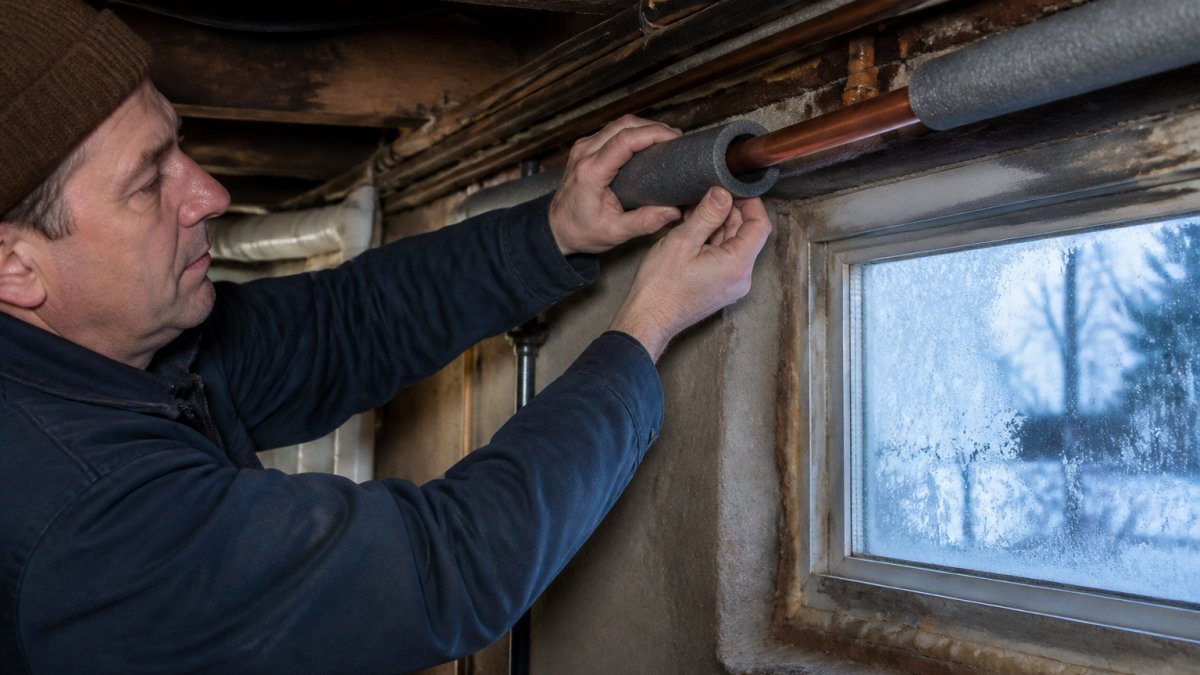
Frozen pipes prevention is the single most important winter task for valley homeowners. One hard freeze can split a pipe and flood a room overnight.
Why a Frozen Pipe Becomes a Burst Pipe
Water expands as it freezes (Essential Tasks After it Warms Up). The ice itself rarely splits the pipe at the frozen point.
Pipes are most vulnerable when the outdoor temperature drops into the low 20s and stays there for several hours, especially when wind pulls heat out of exterior walls. A pipe in an unheated crawl space, an attic, or along an exterior wall can freeze well before the temperature inside the house feels cold.
The Warning Signs Homeowners Miss
- A faucet that trickles instead of flowing when you open it fully
- Frost visible on a pipe, or a pipe that feels cold and rigid
- A faint knocking or banging when you turn on a tap
If you see any of these, treat it as urgent. A trickling faucet is often the last water moving past a partial ice blockage.
A Cold-Weather Checklist for the Valley
Before the first hard freeze:
- Disconnect garden hoses and shut off and drain outdoor hose bibs
- Insulate pipes in crawl spaces, attics, garages, and along exterior walls
- Seal gaps around pipes where cold air enters
On a freezing night:
- Open cabinet doors under sinks on exterior walls so warm air reaches the pipes
- Let a pencil-thin stream run from the faucet farthest from the main, moving water resists freezing
- Keep the garage door closed if supply lines run through it
If a Pipe Freezes: Thaw Safely, Then Check for Damage
Never use an open flame, a blowtorch, or a high-heat space heater on a pipe. Use a hair dryer, a heat lamp, or wrapped towels soaked in warm water, and work from the faucet end toward the frozen section. Open the faucet first so melting water has somewhere to go.
If you cannot find the frozen section, if a pipe has already split, or if water is not flowing after a reasonable thaw attempt, shut off the main and call a licensed plumber. A split pipe can release water only after it thaws, so the damage may not be visible yet.
Our guide on thawing frozen pipes safely walks through the safe method step by step.
Prevention vs. Repair: What to Expect
A frozen but intact pipe is usually a thaw-and-insulate job. A split pipe is a repair or replacement job, and the cost depends on where the pipe sits, an accessible basement line is far cheaper to fix than one buried in a slab or a finished wall. The cheapest outcome is always prevention: insulation and a shutoff you know how to use cost far less than emergency water damage repair.
Clogged Drain Causes: Why the Same Sink Keeps Backing Up
A clogged drain that returns again and again is telling you something. The blockage is deeper than the trap, or the pipe itself is failing.
Common clogged drain causes include:
- Grease and food scraps in the kitchen line
- Hair and soap scum in the bathroom
- Tree roots invading a sewer line
When one drain backs up, a plunger may clear it. When several drains slow at once, the problem sits in the main line. That calls for a sewer inspection with a camera to see the real cause.
Water Heater Problems: When Slow and Lukewarm Turns Into a Real Failure
Water heater problems rarely appear all at once. They build. The water takes longer to heat. The shower runs lukewarm. Rusty water shows up at the tap.
These are the warning signs to watch:
- Water that never gets fully hot
- Rumbling or popping sounds from the tank
- Rust-colored water
A tank that leaks from the body cannot be repaired. If your heater is over ten years old and running slow, our list of signs your water heater is failing helps you decide between repair and replacement before it fails on a cold morning.
Low Water Pressure Causes: What’s Really Happening Inside Your Pipes
Low water pressure causes fall into two groups: problems in your home and problems in the supply line. Finding which one you have saves time and money.
Inside the home, look for:
- A clogged aerator or showerhead
- A failing pressure regulator
- Corroded galvanized pipes
Hard water adds to the trouble. Mineral buildup coats the inside of pipes and fixtures over time (Hardness of Water). If only one fixture is weak, start there. If the whole house is weak, the cause sits in the pipes or the main line.
Toilets, Garbage Disposals, and the Fixtures That Fail Quietly
Some failures announce themselves. Others leak, jam, or run quietly for weeks. Toilet repair tops this list. A running toilet can waste water around the clock without a sound you would notice.
The quiet failures we see most:
- A running toilet with a worn flapper
- A garbage disposal that hums but will not turn
- A dripping faucet with worn parts
Fix a running toilet early. A worn flapper is a small part with a large water bill attached. A jammed disposal often clears with the reset button, but never reach inside it.
DIY Troubleshooting vs. Calling a Licensed Plumber
Some jobs are safe to handle yourself. Others put your home at risk. Knowing the line between them matters, and so does knowing what a professional call is likely to cost before you pick up the phone.
Safe DIY Jobs
- Plunging a single slow drain
- Replacing a showerhead or aerator
- Resetting a garbage disposal with the reset button
These are low-risk, reversible tasks. If a job needs a wrench on a supply line, a torch, or opening a wall, stop and reassess.
Jobs That Need a Licensed Plumber
- Any leak inside a wall, ceiling, or slab
- Sewer backups or repeat clogs in the same line
- Water heater repair or replacement
A licensed plumber carries the training and insurance to do the job right. That protects your home and your wallet. Our article on why choose licensed plumbing contractors explains the reasons in detail.
The Decision Framework
Ask three questions before you start:
- Is water involved where it shouldn’t be? A leak behind a wall or under a slab is a pro job, the damage from guessing is worse than the repair.
- Is it one fixture or the whole system? One slow drain is usually DIY. Several fixtures slowing at once points to the main line.
- Could a mistake cause flooding, gas exposure, or structural damage? If yes, call a pro.
When in doubt, shut off the fixture’s supply valve or the main shutoff and call a licensed plumber. A service call is cheaper than water damage remediation.
What Drives the Cost
Plumbing pricing is not one number. A common pattern is a service-call or diagnostic fee plus labor and parts, and the total depends on:
- Access, an exposed pipe under a sink is quick; a pipe in a slab or finished wall is not
- Time of day, after-hours and emergency calls typically carry a premium
- Parts, a flapper is inexpensive; a water heater or a section of repiped line is not
Ask for an upfront estimate in writing before work begins, and ask whether the diagnostic fee is credited toward the repair. That single question prevents most billing surprises.
Here is how the most common problems compare:
| Problem | Likely Cause | DIY or Pro | Urgency |
|---|---|---|---|
| Dripping faucet | Worn parts | DIY for washers, pro for cartridges | Low |
| Clogged drain | Grease, hair, roots | DIY if one drain, pro if repeat | Medium |
| Running toilet | Worn flapper | DIY | Low |
| Frozen pipe | Cold exposure | Pro if split or no flow | High |
| Water heater failure | Age, sediment, tank leak | Pro | High |
| Low water pressure | Clog, regulator, corrosion | Pro for whole-house | Medium |
Most of these problems share one root: an aging system pushed by hard water and cold weather. Catch the small signs early and you avoid the emergency call. When a job needs a pro, Classic Plumbing Solutions has served the Roanoke Valley since 1980 with upfront pricing, background-checked technicians, and a 3-Way Warranty on parts, labor, and services.
Frequently Asked Questions
What are the most common household plumbing problems?
The most frequent calls involve leaky faucets, dripping pipes, clogged drains, running toilets, water heater failures, and low water pressure. In older Roanoke homes, worn parts inside fixtures and aging supply lines make these issues more likely. Many start small, like a slow drain or a faint drip under the sink, and turn into water damage or higher bills if ignored. Catching the symptom early usually means a simpler repair.
Why do pipes freeze during cold weather?
Pipes freeze when the water inside drops below 32°F. Exposed pipes in attics, crawl spaces, garages, and exterior walls lose heat fastest, especially during sustained cold snaps. As water turns to ice it expands, which can split the pipe. The burst often shows up later when the ice thaws and water pours out. Insulating exposed runs and letting a faucet drip during freezing temperatures are the simplest frozen pipes prevention steps.
What causes a drain to keep clogging?
A drain that clogs repeatedly usually has buildup on the pipe walls, not just a single blockage. Grease, hair, soap scum, and food particles coat the inside of the pipe and narrow the opening over time. Chemical cleaners may punch a hole through but rarely remove the buildup. Common clogged drain causes also include tree roots entering sewer lines and older cast-iron pipes that have corroded. A camera inspection shows what is actually happening.
How can you tell if a pipe is leaking behind a wall?
Watch for water stains or bubbling paint on walls and ceilings, a musty smell in one room, or an unexplained jump in your water bill. A water meter test helps: shut off every fixture and check whether the meter still moves. If it does, water is running somewhere. Low water pressure causes can also trace back to a hidden leak. A licensed plumber can confirm with leak detection equipment before opening the wall.

