

Last Updated: November 1, 2026
Quick Summary
Call an emergency plumber when water stops flowing entirely, pressure drops suddenly across the whole house, discolored water appears with the pressure loss, or you see signs of an active leak. A slow trickle at one faucet is usually a clogged aerator and is not an emergency.
- Shut off your main valve and call if water stops flowing entirely or pressure collapses in minutes.
- Check with neighbors first: if their water is weak too, the issue is on the utility side.
- A partly open main shut-off valve is one of the most common causes of a sudden house-wide drop.
- A moving water meter dial with every fixture off means water is still flowing somewhere.
- While you wait, kill power near standing water and call 911 if you smell gas or see sparks.
Table of Contents
- Low Water Pressure: When It’s a Plumbing Emergency
- Sudden Low Water Pressure Throughout the House
- Low Water Pressure and Hidden Water Leaks
- How to Check Water Pressure at Home
- Low Water Pressure in One Faucet
- What to Do While You Wait for the Emergency Plumber
- Call Classic Plumbing Solutions for Low Water Pressure
- Frequently Asked Questions
Low Water Pressure: When It’s a Plumbing Emergency
Low water pressure is a plumbing emergency when it drops suddenly across the whole house, arrives with discolored water, or comes with signs of an active leak. A slow trickle at one faucet is usually a clogged aerator. A sudden, house-wide loss of flow is a different problem, and it can point to a burst pipe or a failing main valve. This guide from Classic Plumbing Solutions walks you through the checks you can do safely, the signs that mean stop and call, and when to call an emergency plumber for low water pressure rather than waiting for a weekday appointment.
Here is the short version. If water stops flowing entirely, if you see water where it should not be, or if pressure collapses in minutes, stop reading and shut off your main valve.
The tricky part is the middle ground. Many homeowners wait too long on a problem that was already an emergency. Others pay emergency rates for a clogged showerhead. Below, we break down the difference.
Here is the quick-reference version of when low water pressure is an emergency and when it is not.
| Situation | Likely cause | What to do |
|---|---|---|
| Water stops flowing entirely | Burst pipe or failing main valve | Shut off your main valve and call |
| Sudden drop across whole house | Main line, pressure regulator, or utility | Check neighbors, main valve, regulator, meter |
| Discolored water with pressure loss | Pipe or system problem | Shut off the main valve and call for help |
| Signs of an active leak | Hidden leak in buried line or slab | Turn off fixtures, watch the water meter |
| Slow trickle at one faucet | Clogged aerator | Clean the aerator; usually not an emergency |
| Pressure collapses in minutes | System-level failure | Stop reading and shut off your main valve |
Sudden Low Water Pressure Throughout the House
Sudden low water pressure throughout the house is the most serious pattern. It means the problem sits at your main water line, your pressure regulator, or the municipal water supply, not at a single fixture.
Step 1: Ask your neighbors. If their water is also weak, the issue is on the utility side, and no plumber can fix it. Call your water utility and report the service interruption.
Step 2: Confirm it is house-wide. Open a cold tap at the kitchen sink, a bathroom sink, and an outdoor hose bib. If all three are weak, the problem is at the main.
Step 3: Check the main shut-off valve. A gate valve that is only partly open, or a ball valve turned halfway, throttles flow to the entire house.
Step 4: Look at the pressure regulator. A pressure-reducing valve (PRV) that has failed can either spike pressure or choke it. If your home has a bell-shaped valve on the main line near the meter, that is the PRV.
Step 5: Rule out a hidden leak. A leak in a buried line or under a slab steals water before it reaches your fixtures, so pressure drops while water quietly damages the structure. Turn off every fixture and watch the water meter.
Step 6: Consider pipe condition. Galvanized steel pipes corrode from the inside out, and the buildup narrows the passage over decades. If your home still has original galvanized lines, a gradual then sudden pressure loss is a common pattern.
A sudden pressure drop with rust-colored water or water hammer is a red flag. Shut off the main valve and call for help. For guidance on what to do in those first minutes, see how to respond to an emergency plumbing situation.
House-wide sudden low pressure is a system-level problem. Check neighbors first, then the main valve, then the regulator, then the meter for hidden flow. If any step points to a leak or a failed valve, stop and call an emergency plumber rather than continuing to troubleshoot.
Low Water Pressure and Hidden Water Leaks
Low water pressure and hidden water leaks often travel together. A leak in a buried pipe or under a slab steals water before it reaches your faucets, so the pressure drops while water quietly damages your home.
Watch for these warning signs:
- Water stains on ceilings, walls, or floors
- A water bill that climbs without a change in habits
- Damp spots or musty smells in the basement
- The sound of running water when everything is off
If you suspect a leak, turn off every fixture and check your water meter. A moving dial means water is still flowing somewhere. You can learn the full warning signs in our guide on how to know if you have a hidden water leak, or follow the practical steps in how to detect hidden water leaks in your home.
A hidden leak is one of the clearest reasons to call an emergency plumber. Water damage compounds fast, and mold can start within days.
How to Check Water Pressure at Home
You can measure your own water pressure with a simple pressure gauge that screws onto an outdoor hose bib or a laundry sink faucet.
Follow these steps:
- Screw the gauge onto a hose bib near where the main line enters the house.
- Open the valve fully and read the needle.
- Test a second fixture to confirm the reading.
- If the reading is high, your pressure regulator may have failed.
- If the reading is low, the problem is upstream: the main valve, the supply line, or the utility.
Write down the number. It helps a plumber diagnose the issue before arriving.
Low Water Pressure in One Faucet
Low water pressure in one faucet usually means a local clog, not a system-wide failure. The fix is often simple and does not need an emergency call.
Check these first:
- Faucet aerator: Unscrew the tip and rinse out mineral buildup.
- Showerhead: Soak it in vinegar to dissolve deposits.
- Shut-off valve: Make sure the valve under the sink is fully open.
- Supply line: Look for kinks or a clogged screen.
If one fixture stays weak after these checks, the blockage may sit deeper in that branch line. A licensed plumber can clear it without guesswork.
The rule of thumb: one weak fixture is a maintenance item. Multiple weak fixtures, or a sudden drop, is when to call an emergency plumber for low water pressure.
What to Do While You Wait for the Emergency Plumber
While you wait, protect your home. The goal is to limit water damage, keep people safe, and give the technician a clear picture when they arrive. Work through these steps in order.
1. Shut off the main water valve if water is escaping. Find the main shut-off valve, usually near the water meter, in a basement, crawlspace, or utility closet. Turn it clockwise until it stops. If you have a ball valve, a quarter turn is enough.
2. Kill power to any area near standing water. Water and electricity are a dangerous combination. If water is near outlets, appliances, or the electrical panel, switch off the breaker for that area before you step into the water.
3. Protect belongings and the structure. Move furniture, rugs, and electronics away from wet areas. Use towels, buckets, and a wet/dry vacuum to contain water. If water is near a wall, place a barrier to keep it from spreading. Document the damage with photos before cleanup, your insurer may ask for them.
4. Clear a path for the technician. Move boxes and clutter away from the water heater, main line, and meter. The plumber needs to reach the shut-off valve, the PRV, and any visible piping without delay.
5. Write down what you observed. Note when the problem started, which fixtures are affected, whether neighbors have pressure, and any pressure-gauge reading you took. A short timeline speeds up diagnosis and helps the plumber decide which tools to bring.
6. Avoid unsafe repairs. Never open a wall or ceiling to chase a leak yourself, you can hit a live wire or a gas line. Do not attempt to solder, patch, or tighten a fitting under pressure.
If you smell gas, see sparks, or cannot safely reach the main valve, leave the home and call 911 from a safe location. Do not re-enter until emergency responders say it is safe.
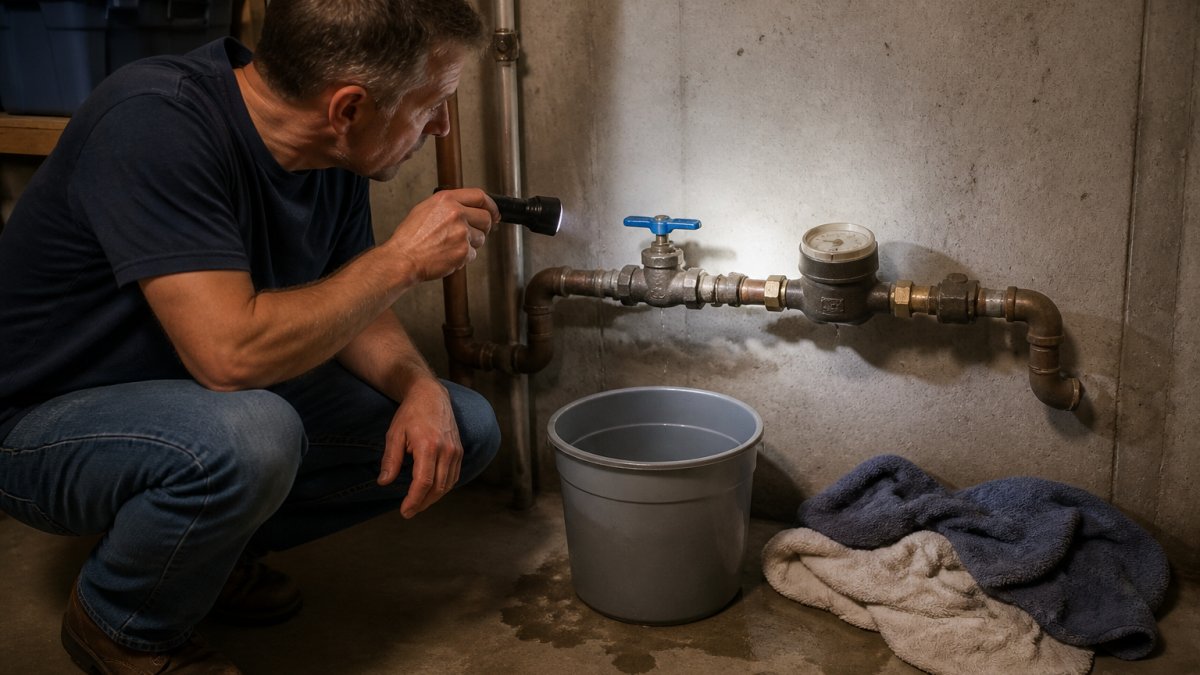
Have your pressure gauge reading and a short timeline ready. It speeds up the diagnosis.
While you wait: shut off the main if water is escaping, kill power near standing water, protect belongings, clear a path, and write down what you observed. Leave repairs to the professional, and call 911 if you smell gas or see sparks.
Call Classic Plumbing Solutions for Low Water Pressure
When the signs point to an emergency, you want a team that answers fast and explains the problem before touching a pipe. Classic Plumbing Solutions has served the Roanoke Valley since 1980 with an A+ BBB accreditation, and our technicians are drug-tested and background-checked.
We give upfront pricing and get your authorization before any work begins. Our 3-Way Warranty covers parts, labor, and services. We also offer project financing and discounts for seniors and military families.
If you are still deciding who to hire, our guide on how to choose a reliable local plumber covers what to verify. And if you want to understand why licensing matters for emergency work, read why choose licensed plumbing contractors.
When low water pressure turns into a real plumbing emergency, act quickly and call a pro. Classic Plumbing Solutions is ready to help you restore water pressure safely and get your home back to normal.
Frequently Asked Questions
How can I tell if low water pressure is a plumbing emergency?
Low water pressure is an emergency when it happens suddenly across the whole house, especially if it comes with water discoloration, a hissing sound in the walls, or water pooling near the meter. If you see active flooding, smell sewage, or hear water hammer, shut off the main valve and call an emergency plumber right away. Slow, steady pressure loss over weeks is usually a maintenance issue, not an emergency, but it still deserves a professional inspection.
Should I call a plumber if only one faucet has low water pressure?
Not necessarily. Low water pressure in one faucet is often caused by a clogged aerator or a partially closed shut-off valve under the sink. Unscrew the aerator, rinse the screen, and check that the valve is fully open. If the pressure stays weak after those steps, or if the faucet shares a wall with a bathroom or laundry room, call a plumber to rule out a hidden leak or a failing shut-off valve inside the wall.
Can a hidden water leak cause low water pressure?
Yes. A hidden water leak, such as a pinhole leak in a pipe or a failing joint behind a wall, can drop pressure before you see any water. Watch for rust-colored water, musty smells, water stains on ceilings or floors, or a water bill that jumps without extra usage. If low water pressure and hidden water leaks seem linked, turn off every fixture and check whether the water meter still moves. A moving meter with no water running points to a leak that needs a licensed plumber.
What should I check before calling an emergency plumber for low water pressure?
Check whether the problem affects one fixture or the whole house, confirm the main water valve and the fixture shut-off valves are fully open, and ask neighbors whether they have pressure. Look for visible leaks under sinks and around the water heater, and note any water discoloration or unusual noises. If you have a pressure gauge, screw it onto an outdoor hose bib and record the reading. Share these details with the dispatcher so the emergency plumber arrives prepared.

